Why is NAD+ linked to Anti-Aging?
NAD+ is one of the body’s most essential molecules for maintaining cellular health — and one of the few that naturally declines with age. By the time we reach middle age, NAD+ levels can drop by more than 50 percent. This decline affects how efficiently our cells produce energy, repair DNA damage, and respond to metabolic or oxidative stress.
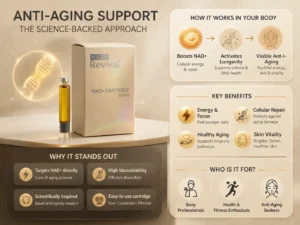
Because NAD+ powers enzymes involved in longevity pathways — including sirtuins and PARPs — higher NAD+ availability is associated with healthier cellular function. Supporting NAD+ levels may therefore help promote better energy production, improved cellular repair, enhanced resilience to everyday stressors, and overall healthier ageing at a cellular level.
While NAD+ is not a “fountain of youth,” maintaining optimal levels allows the body’s own repair and regeneration systems to function more effectively — which is why it has become one of the most researched and promising molecules in longevity science.
What is the Difference Between NAD, NAD+, and NADH?
NAD is a coenzyme found in all living cells. It plays a key role in energy production and DNA repair.
It restores energy, improves athletic performance, aids mental clarity, helps cure cravings and could even aid in alleviating depressive episodes.
NAD, NAD+, and NADH are closely related molecules that play a vital role in cellular energy, metabolism, and anti-aging processes — but understanding their differences is key to unlocking the full benefits of NAD therapy.
The term “NAD” is often used as a general umbrella term when referring to both its active forms: NAD+ and NADH.
NAD+ (the oxidised form) is crucial for initiating chemical reactions in the body. It helps convert nutrients into energy, supports DNA repair, and promotes cellular regeneration. In anti-aging treatments, NAD+ is the primary form used to help restore youthful cellular function.
NADH (the reduced form) is created when NAD+ gains electrons during metabolic processes. It plays a key role in generating ATP, the energy currency of the cell, and supports brain function and mental clarity.
While traditional anti-aging approaches often focus on surface-level changes like creams or cosmetic procedures, NAD therapy works on a deeper level — targeting cellular decline and supporting mitochondrial health. By replenishing NAD+ levels, this therapy may improve energy, enhance cognitive performance, support mood balance, and promote overall cellular rejuvenation.
In summary, NAD refers to the broader molecule family, while NAD+ and NADH describe specific functional states of the molecule that influence how your body ages and heals at the cellular level.
What influences our own NAD+ levels?
Several factors can deplete NAD levels. Aging is the primary factor, but lifestyle choices also play a significant role. Stress, poor diet, lack of exercise, and excessive alcohol consumption can all reduce NAD levels.
To maintain or boost NAD levels, consider these lifestyle changes: