NAD vs Ozempic: Key Differences, Benefits & Weight Loss Effects
NAD+ Nutrition •
Apr 06, 2026 •
Table of Contents
In today’s rapidly evolving health and wellness space, two names are gaining massive attention: NAD and Ozempic. While both are associated with improved health and weight-related outcomes, they function in completely different ways.
Understanding the real difference between NAD vs Ozempic is essential before choosing which path aligns with your goals. One focuses on cellular health and long-term vitality, while the other directly targets appetite and blood sugar control.
In this guide, we’ll break down how each works, their benefits, and what you can realistically expect.
What Is NAD and How Does It Work?
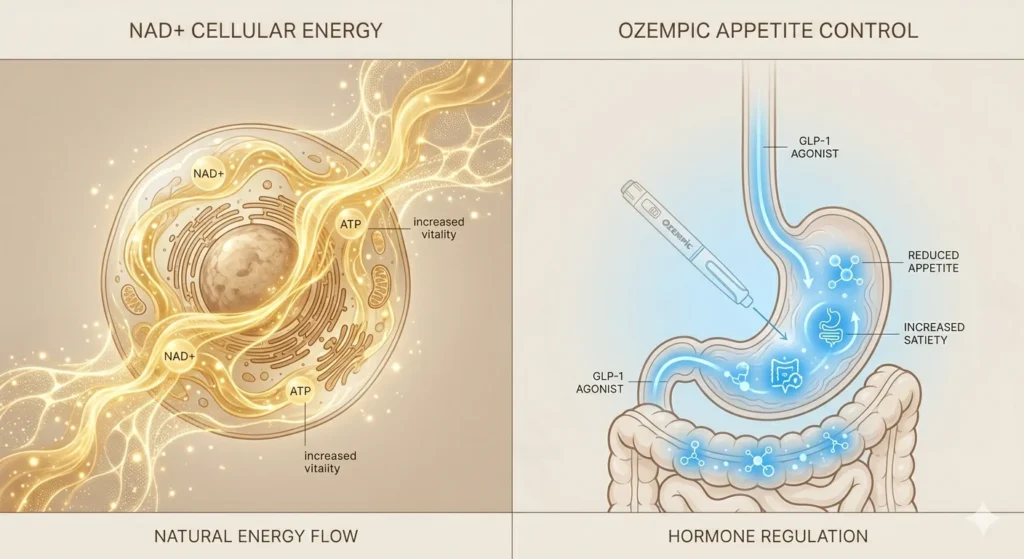
NAD (Nicotinamide Adenine Dinucleotide) is a naturally occurring molecule found in every cell of the body. It plays a central role in energy production, metabolism, and cellular repair.
To fully understand it, it’s helpful to explore the basics of What Is Nad, where its role in mitochondrial function and DNA repair becomes clear.
NAD is also closely related to compounds like Nicotinamide, which act as precursors and help the body maintain optimal levels.
When NAD levels are high, the body becomes more efficient at producing energy, repairing damage, and maintaining metabolic balance—key foundations behind many NAD benefits.
What Is Ozempic and How Does It Work?
Ozempic is a prescription medication originally developed for managing type 2 diabetes. It works by mimicking a hormone called GLP-1, which helps regulate blood sugar levels and reduce appetite.
Unlike NAD, which works at the cellular level, Ozempic directly influences hunger signals and digestion. This leads to reduced calorie intake and, as a result, weight loss.
When comparing NAD vs Ozempic, this is one of the biggest differences: one enhances internal cellular processes, while the other controls external behavioral factors like appetite.
NAD vs Ozempic: Key Differences Explained
The comparison between NAD vs Ozempic is not about which one is better overall, but rather which one serves your specific goal.
NAD supports long-term health by improving energy production, enhancing metabolism, and promoting cellular repair. It is often associated with longevity and performance optimization, especially when used alongside longevity supplements.
Ozempic, on the other hand, is designed for targeted weight loss and blood sugar control. It delivers faster, more noticeable changes in body weight, but does not directly improve cellular health in the same way NAD does.
Weight Loss: NAD vs Ozempic
When it comes to weight loss, the difference between NAD vs Ozempic becomes even more apparent.
Ozempic works quickly by reducing appetite, making it easier to consume fewer calories. This often leads to noticeable weight loss within a relatively short period.
NAD, however, approaches weight management differently. By improving mitochondrial efficiency and metabolism, it helps the body burn energy more effectively. While this may contribute to weight loss, it is usually more gradual and sustainable.
For those seeking rapid weight loss, Ozempic may seem more appealing. For those focused on long-term metabolic health, NAD offers a deeper, more foundational approach.
Benefits Comparison: NAD vs Ozempic
The benefits of NAD vs Ozempic extend beyond weight loss and into broader health outcomes.
NAD is widely recognized for improving energy levels, supporting brain function, and enhancing cellular repair processes. These effects are central to the long-term NAD benefits that many users seek.
Ozempic’s primary benefits revolve around appetite control, blood sugar regulation, and weight reduction. While highly effective for these purposes, its impact is more specific and less holistic compared to NAD.
NAD vs Ozempic Comparison
Feature
NAD
Ozempic
Type
Natural coenzyme
Prescription drug
Function
Cellular energy & repair
Appetite & blood sugar control
Weight Loss
Indirect, gradual
Direct, rapid
Long-term Health
Strong impact
Limited
Use Case
Longevity & performance
Medical weight loss
Safety and Considerations
When evaluating NAD vs Ozempic, safety is an important factor.
NAD-based approaches, especially when using high-quality supplements or delivery systems, are generally well tolerated and support natural biological processes.
Ozempic, being a pharmaceutical drug, may come with side effects such as nausea, digestive discomfort, or other metabolic responses. It should always be used under medical supervision.
Which One Should You Choose?
Choosing between NAD vs Ozempic depends entirely on your goals.
If your priority is long-term health, energy, and cellular optimization, NAD is the better choice. It supports the body at a fundamental level and contributes to overall well-being.
If your main goal is rapid weight loss or managing blood sugar levels, Ozempic may provide faster results.
In some cases, individuals explore combining lifestyle improvements with NAD support to achieve sustainable results without relying solely on medication.
Final Thoughts
The comparison of NAD vs Ozempic highlights two very different approaches to health and weight management.
One focuses on optimizing the body from within, while the other targets specific outcomes like appetite and weight. Understanding these differences allows you to make a more informed and personalized decision.
Ready to unlock real energy, metabolism, and longevity benefits?
👉 Discover advanced NAD solutions 👉 Support your body at the cellular level 👉 Take control of your long-term health today
FAQ
Is NAD better than Ozempic for weight loss?
Ozempic works faster for weight loss, while NAD supports long-term metabolic health.
Can NAD help with weight loss?
Yes, indirectly by improving metabolism and energy efficiency.
Is Ozempic safe for everyone?
No, it should only be used under medical supervision.